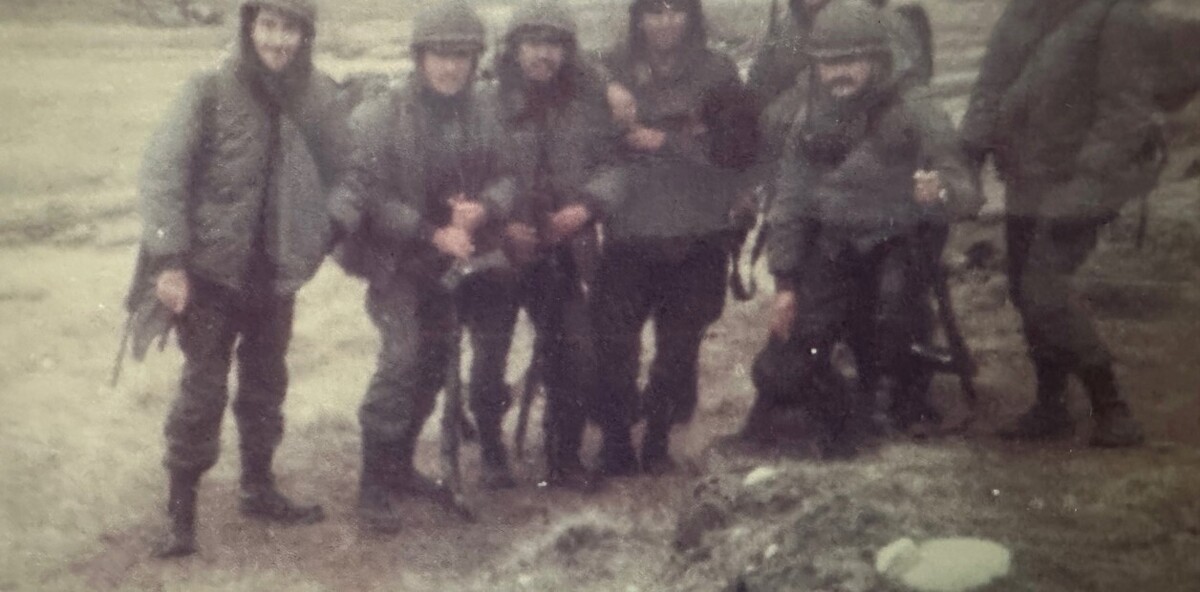
Buenos Aires, January 24, 2026 - Total News Agency - TNA - For more than two decades, the name of retired Army Lieutenant Jorge Taranto has been associated with one of the most sensitive accusations to emerge from the Falklands War: that he tortured Argentine soldiers under his command in 1982. Over 21 years, that accusation was investigated, reopened, and ultimately dismissed in various judicial instances, without its veracity ever being proven. The accusation originated in a case in the federal courts of Comodoro Py. During the investigation, the regiment's commander, the unit's doctor, soldiers under Taranto's command, and the corporal mentioned as the victim testified. The corporal denied being staked out and clarified that Taranto was not his direct superior. Despite that final ruling, a new case was pursued in the Federal Court of Río Grande, Tierra del Fuego, based on similar accusations. In that material, former soldier Juan de la Cruz Martins accused Taranto of staking out a corporal and being responsible for the death of soldier Remigio Fernández. However, the process continued for years, incorporating testimonies from people who, according to the defense, did not belong to his platoon or were kilometers away from his position during the war. The investigation also determined that Fernández was not under Taranto's command and that his death was caused by malnutrition and traumatic stress in the context of the British naval blockade. In September 2024, Taranto filed criminal complaints for false accusation and perjury against a federal prosecutor from Río Grande, a former Secretary of Human Rights from Corrientes, and a leader from the Malvinas War Veterans Center in La Plata. The presiding judge dismissed the case, highlighting that the officer shared the same living conditions as his soldiers and returned with all the men under his command. With this judicial history, Taranto decided to take action against those he considers responsible for having sustained and reactivated the accusations. As he has reiterated over the years, he returned to the continent with all the men directly under his command alive, after remaining at the head of his section throughout the entire campaign, in extreme conditions of isolation, cold, and food shortages, without requesting relief and maintaining the group's cohesion until the final retreat. The judicial conflict that marked him began to take shape from his public criticisms in 2002 and then in 2005 of the book and subsequent film 'Illuminated by Fire.' Taranto presented himself voluntarily, and his defense raised the issue of res judicata. In the last decade, there has been greater public recognition of Falklands War veterans, visible in official acts and spontaneous displays of support, in contrast to the climate of silence and stigmatization that many former combatants report having faced for years. On the other side, the accused flatly reject the retired officer's accusations and maintain that it is a maneuver to discredit human rights-related causes. However, the controversy once again puts at the center of the debate one of the most sensitive wounds of the South Atlantic conflict: the memory of the war, the role of commanders, and the limits between justice, politics, and history. Sources consulted: federal judicial files, Clarín, resolutions from the Federal Chamber of Cassation in Criminal Matters, rulings from the Supreme Court of Justice, public testimonies from ex-combatants, national press archives.